Good 360 helps millions each year with minimal staff
By Kelsey Sweet
Nonprofit Sector News
Sept. 30, 2026
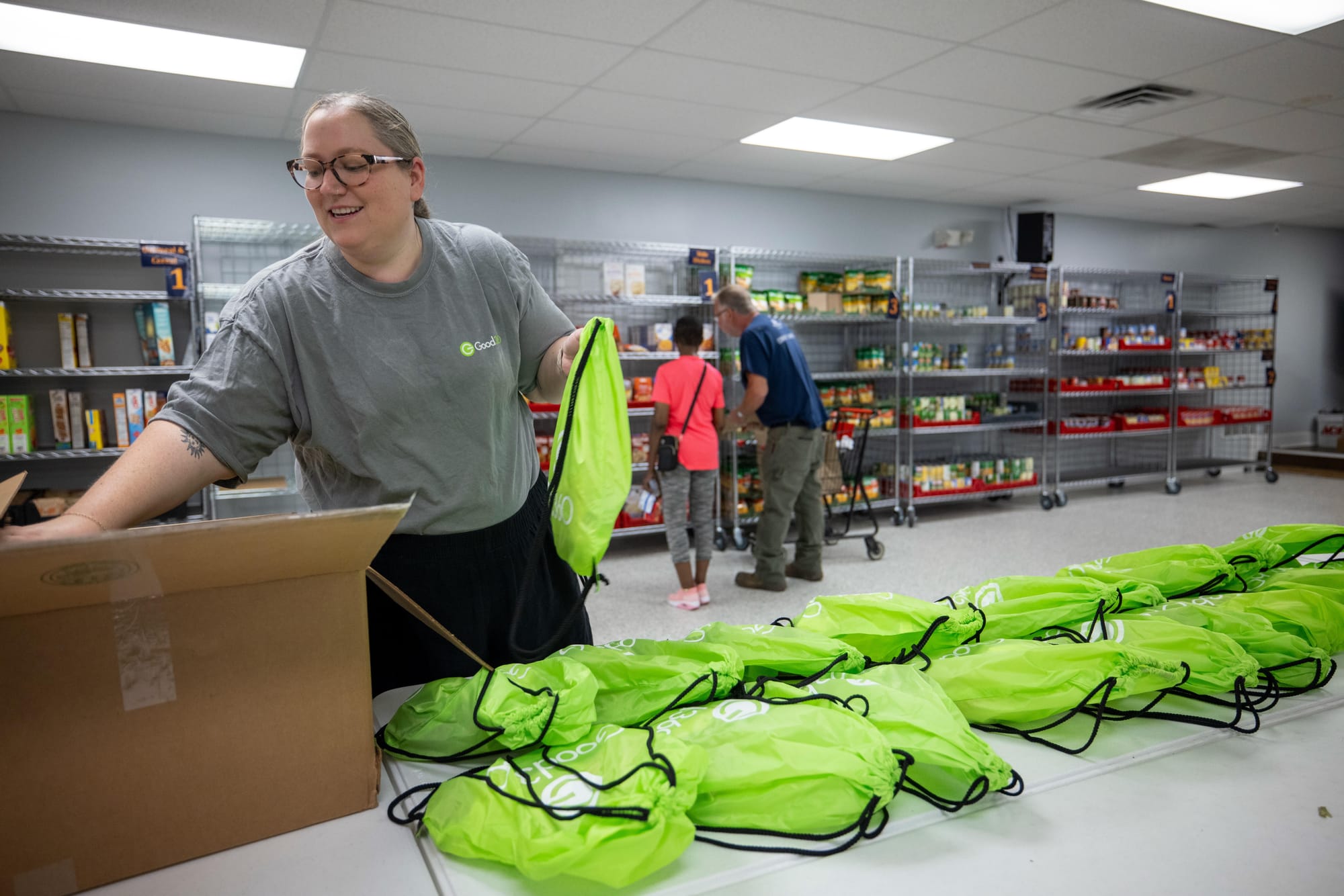
Started by United Way in 1983 when it couldn’t handle 3M’s attempted donation of $12 million in office equipment, the nonprofit Good 360 has grown to become a national and international organization that efficiently gets products to millions of people in need.
Headquartered in Alexandria, Va., Good 360 has been second on Forbes magazine’s list of 100 top US charities for three years running. It has only 80-120 employees globally, and while most intensively focused in the 50 U.S. states, Good 360 mobilizes goods internationally to areas facing humanitarian crises or major disasters, such as Jamaica and Venezuela.
Good 360 distributes items through a massive network of more than 10,000 vetted local nonprofit and community organizations in cities such as Omaha, Neb., and Maysville, Ky. It orchestrates complex logistics programs, such as Direct Truckloads for large regional charities and a Retail Match program that pairs local nonprofit with neighborhood stores for weekly pickups by nearby residents.
The dual-purpose strategy creates a circular economy that diverts billions of pounds of usable goods away from landfills while remaining an unusually lean operation, ensuring that 99% of its gross resources go directly toward program execution and disaster belief.
Cinira Baldi, CEO of Good 360, said, “Our mission is to close the need gap. Essentially, we are a supply chain and logistics organization that specializes in product philanthropy, otherwise known as GIK, or Gifts in Kind.”
Good 360 works to address both the environmental impact of excess products and the growing need for basic necessities. “We’re really trying to keep products out of landfills,” Baldi said. “There are approximately 11 billion pounds of waste that end up in landfills every year, and we’re trying to divert that product and get it into the hands of people who otherwise would not be able to afford it.”
To accomplish that goal, the organization works with major companies to collect and distribute donated products. “We partner with Lowe’s, Disney, Nike, e.l.f. Cosmetics, Sephora and Kohl’s, and we work within our network of nonprofits to move that product into the hands of people who could use it,” Baldi said.
Each donation is ultimately directed toward communities and populations facing financial hardship. “Typically, it’s vulnerable populations,” Baldi said. “That could be people who are unhoused, people living through substance abuse, women who live in domestic abuse shelters, or people living well below the poverty line.”
Good 360 has noted that products it handles have become more salient as families face higher costs and financial uncertainty. Baldi said, “We are seeing more and more people who have either lost their jobs or are really struggling to make ends meet. Everything has gone up in price.”
For some families, those financial pressures can force them to choose between a child's basic involvement or a basic necessity. Good 360 fills the gap. “When you’re talking about having to make the decision between filling your car up with gas or getting your child a new pair of shoes so they can join an athletics club after school, there are some really hard decisions being made right now,” Baldi said.
Efforts by Good 360 and other similar organizations also have been affected by changes in other necessary funding. Baldi said, “There are a lot of programs that used to be federally funded that have been cut, and so there’s a lot of pressure on state funding, as well as the school systems, to try to offset that funding.”
As demand increases, Baldi said donors are also looking for evidence that their contributions make a difference. “They want to see a measurable impact,” Baldi said. “I think that’s probably the most important thing.”
Good 360 does this in part by delivering products to the exact locations where they are needed, what Baldi called its “project manage” capacity. Logistical support becomes especially important when communities are dealing with sudden disasters. “We make it very easy for them to get their product from their distribution centers to us or to the communities that we serve,” Baldi said.
In those situations, Baldi said donated products can provide immediate assistance to people who have lost their essential belongings. “During times of disaster, our ability to work with corporate donors is probably one of the most important things,” Baldi said.
Beyond individual disasters, Good 360 is also preparing for a broader increase in uncertainty and need. “It’s a moment in time where tangible products and product donations are critical,” Baldi said.
Due to this, the organization is focusing on anticipating different challenges communities could face. “We’re kind of living through a complex crisis right now,” Baldi said. “We are living through unprecedented times. There are a lot of unknowns.”
“What we’re doing is trying to scenario-plan out what could happen and what we could do to help serve communities,” Baldi said, adding that her organization focuses most on necessities. “We’re in a place where we are dealing in usable, consumable goods, and everyone needs them,” Baldi said.
The impact of these donations goes far beyond meeting the physical needs, Baldi noted.
“It’s not just giving the actual product. It’s rebuilding dignity, rebuilding self-esteem, helping people to feel good about themselves and to feel good about what they’re wearing or what they have,“ Baldi said. “That gives a feeling of dignity in being able to lift yourself up out of an otherwise very challenging life situation.”
For Balodi, the value of an in-kind donation is ultimately measured not just by the product itself, but by how it makes someone feel.
“You can’t put a price tag on that,” Baldi said. “That is probably the end result of what’s really great about in-kind donations.”